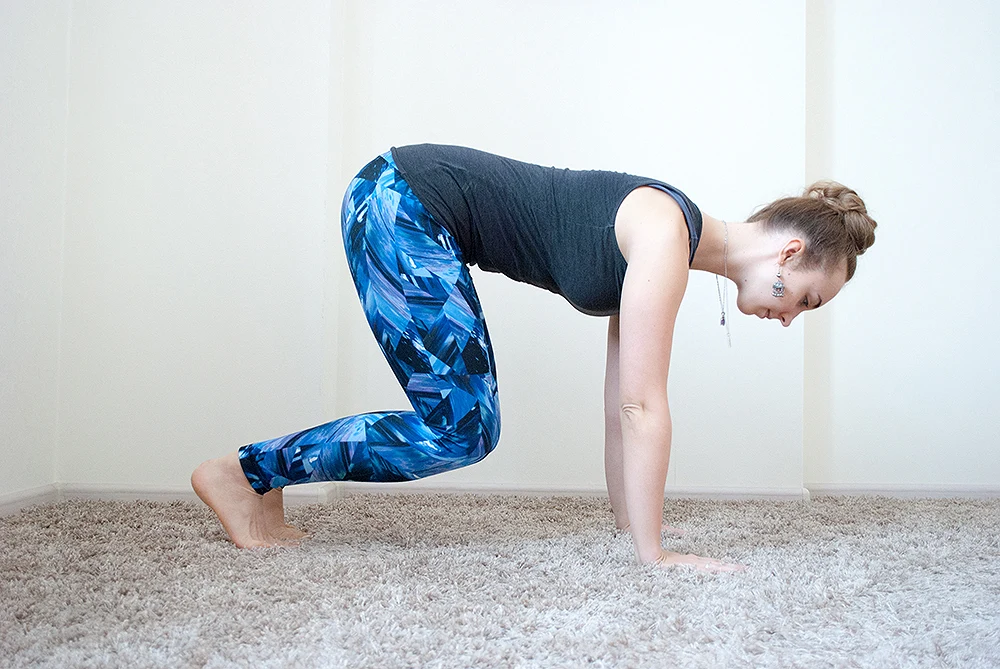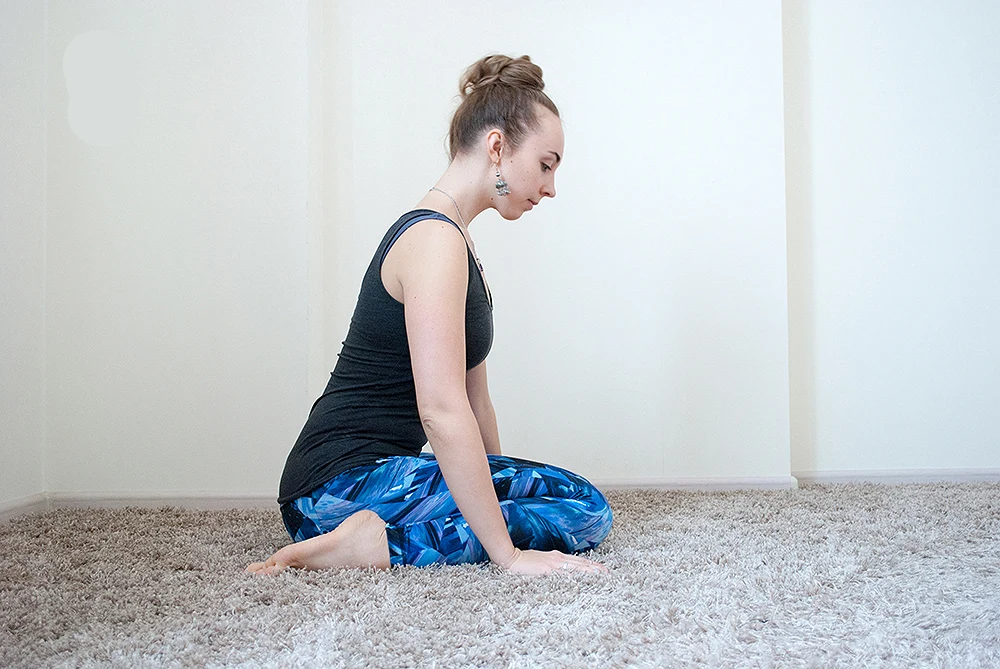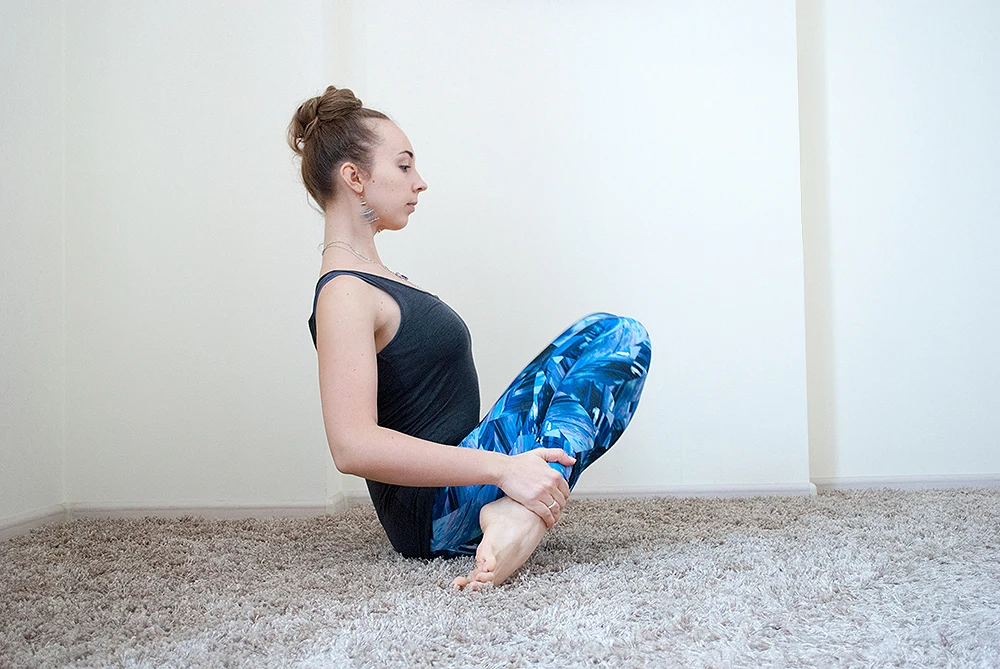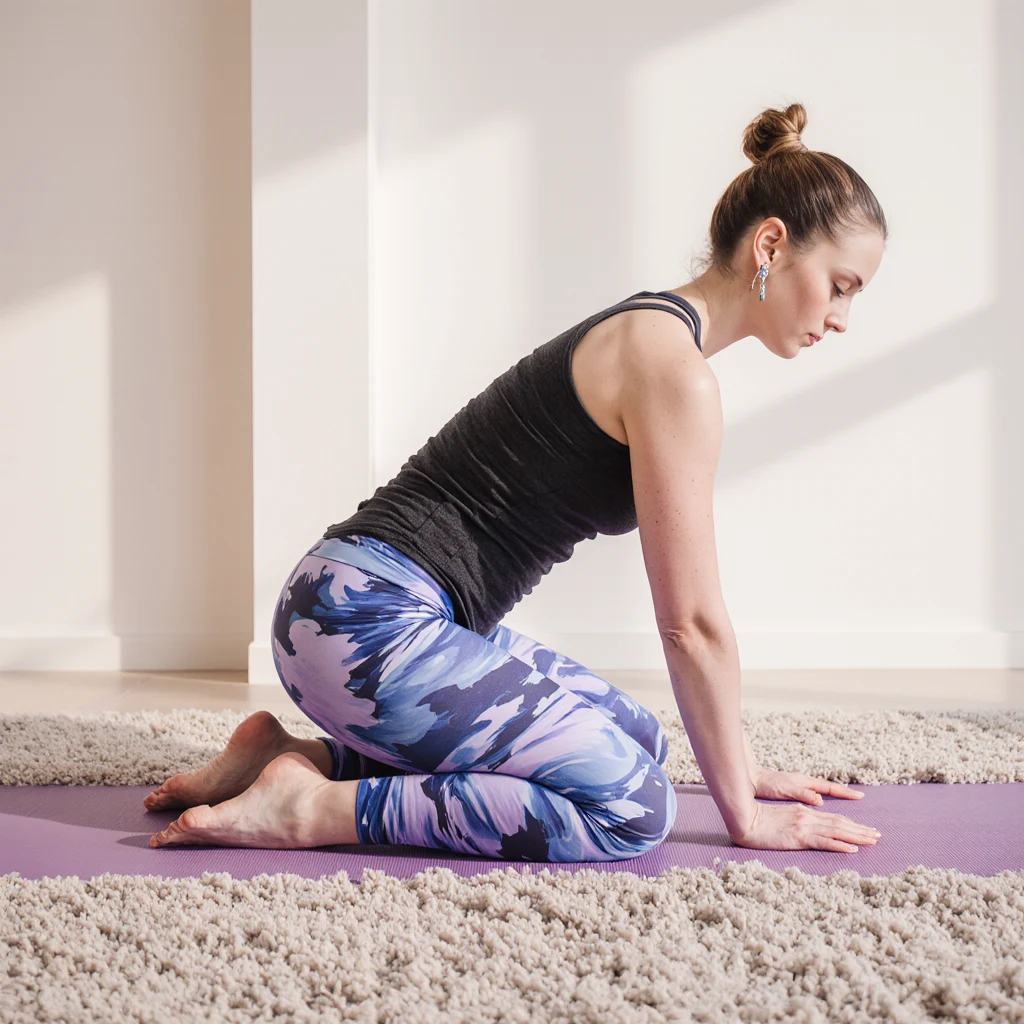
In my teaching practice, I regularly observe practitioners who pay insufficient attention to their body during transitions from sitting to standing and vice versa. This typically occurs among beginners and those attending Vajra Yoga classes for the first time, who are not yet accustomed to the constant mindfulness and awareness required throughout the practice. Years of observing this pattern prompted me to write a dedicated article on correct leg transitions and to create a series of photographs to help illustrate what I describe below.
Understanding the Movement
It may seem like a small, unremarkable movement—transitioning from one position to another—yet it eloquently reveals the level of mindfulness, presence, and body awareness a practitioner has developed. So if you practice, do so with full immersion.
Importance
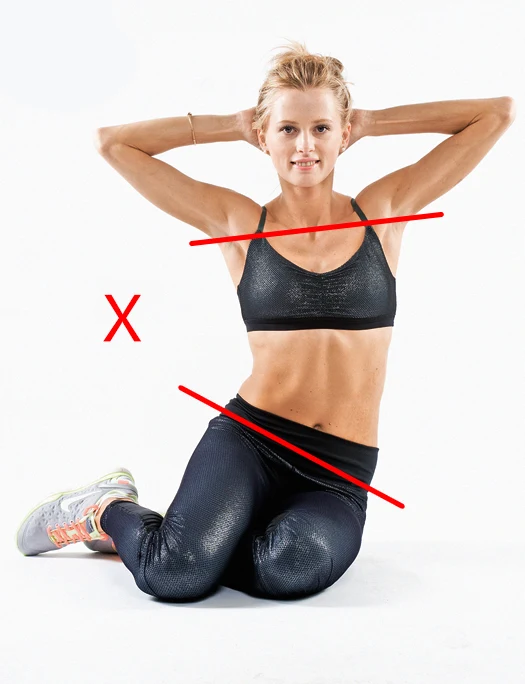
As we know, the most important principle for us is to maintain the plane of the shoulders parallel to the plane of the hips. For this reason, the common practice of rolling to one side—as shown in the photograph on the right—is dangerous, particularly if one drops heavily onto the hip, as often happens when practitioners are fatigued. Look at the red lines I've drawn on this photograph: they clearly demonstrate how significantly this student's pelvis has become skewed. So what is the solution? The answer is, in fact, quite simple. Below, I will present three easy methods for transitioning from a seated position to standing and back. Choose the one that feels most natural based on your body's feedback.
1. Rolling Through Crossed Ankles.
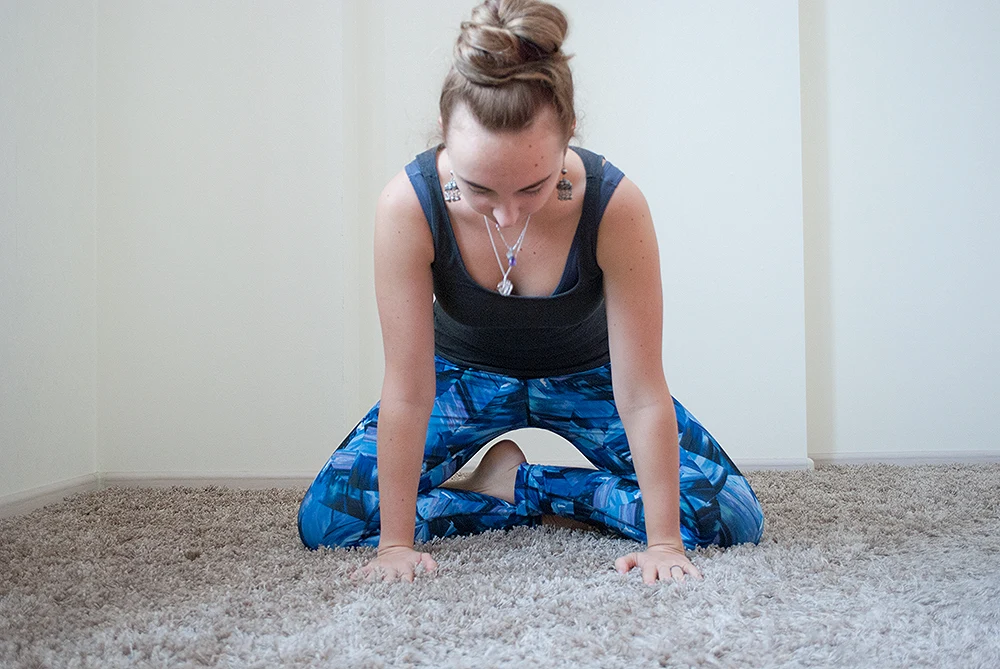
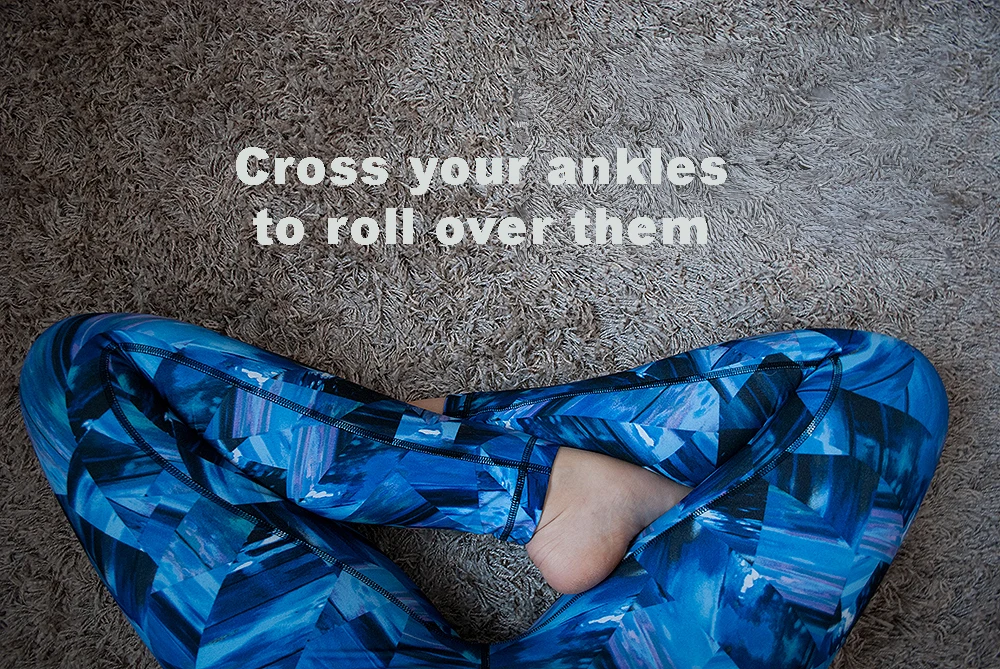
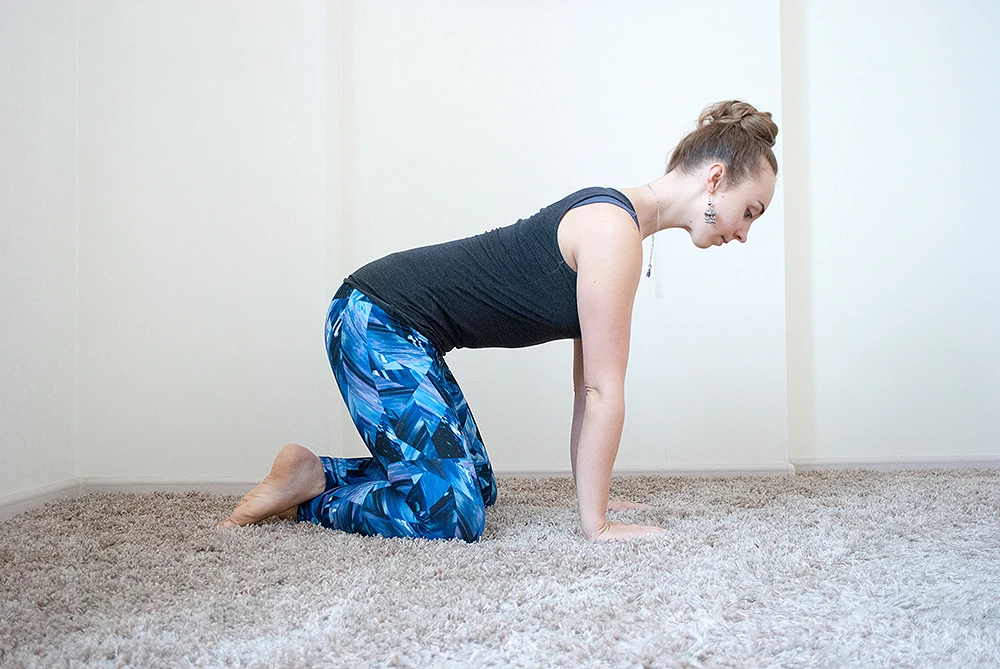
This is the most natural and straightforward method of sitting down or standing up, and the one we use most frequently in class. Cross the ankles and roll forward over them—or, correspondingly, roll backward if you are sitting down from a hands-and-knees position. Pay attention to positioning your knees as wide as your body allows. Ideally, each ankle should be directly above the other. This ensures a smooth and painless transition. Conversely, if the knees are placed too narrow, the shins will press against each other, causing discomfort and forcing the hips to skew during the roll—maintaining symmetry in such a position demands considerable effort. After rolling onto the knees, release the feet, tuck them onto the balls of the feet, and rise to standing. The photographs below illustrate each step.
2. Rolling Through the Feet
Some practitioners find it very difficult to roll symmetrically through crossed shins. This is usually due to limited hip joint mobility, which prevents the knees from being placed wide enough. For these individuals, an alternative method exists: rolling forward through the joined soles of the feet. This approach is slightly more challenging but offers an effective solution to the symmetry problem. To perform it from a seated position, bend the knees and place the feet together. Straighten the spine, then using the fingers or fists against the floor, roll forward with momentum onto the feet, arriving in a squat position. From there, it is easy to stand. When reversing the sequence, remember that lowering from a squat to a seated position must be done with full awareness, supporting yourself with your hands pressed into the floor.
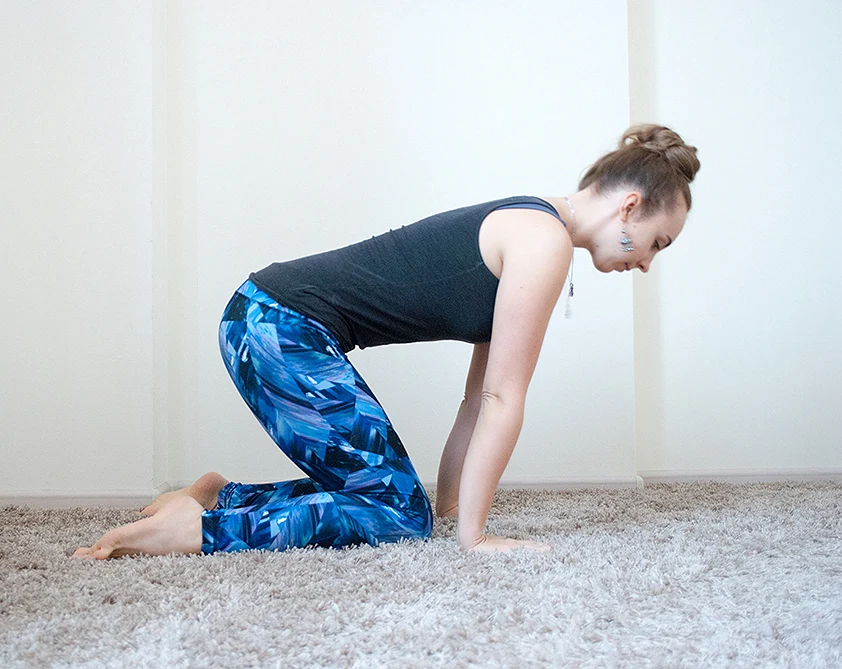
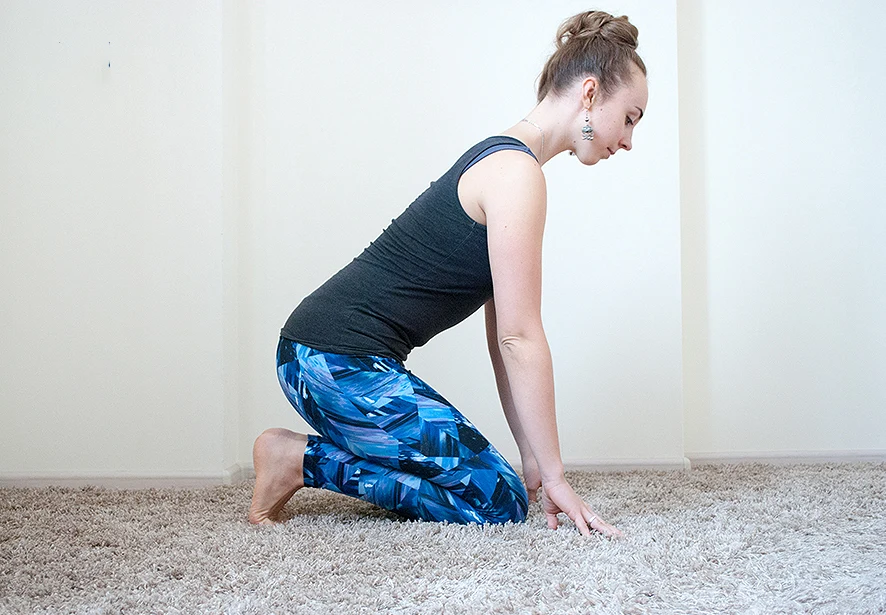
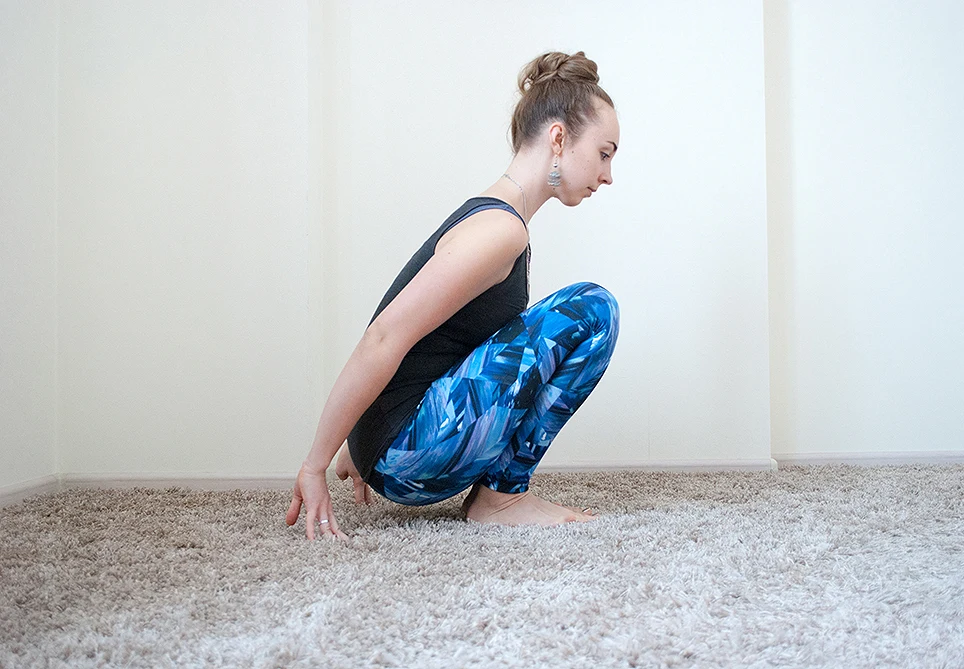
3. Virasana
This final method is for special cases. It demands a high degree of mindfulness and healthy knee joints. If this does not apply to you, disregard it. However, since we are covering the topic of leg transitions, I cannot omit the Virasana method. To perform it from a seated position, lean back with a straight spine, engaging the abdominal muscles well. Lift the legs, bending them at the knees, and hold the feet with your hands, placing the soles on either side of the hips. Then roll forward onto the knees. Done—you may now stand. The same applies in reverse from a standing position: come down onto your hands and knees, bringing the knees together. Place the feet wider apart and sit between them. Then, leaning back with an upright torso, lift the knees and straighten the legs. Done—you are seated.